

Robbyant has open-sourced LingBot-World 2.0, an AI world model that generates hour-long interactive video at 720p, 60fps.
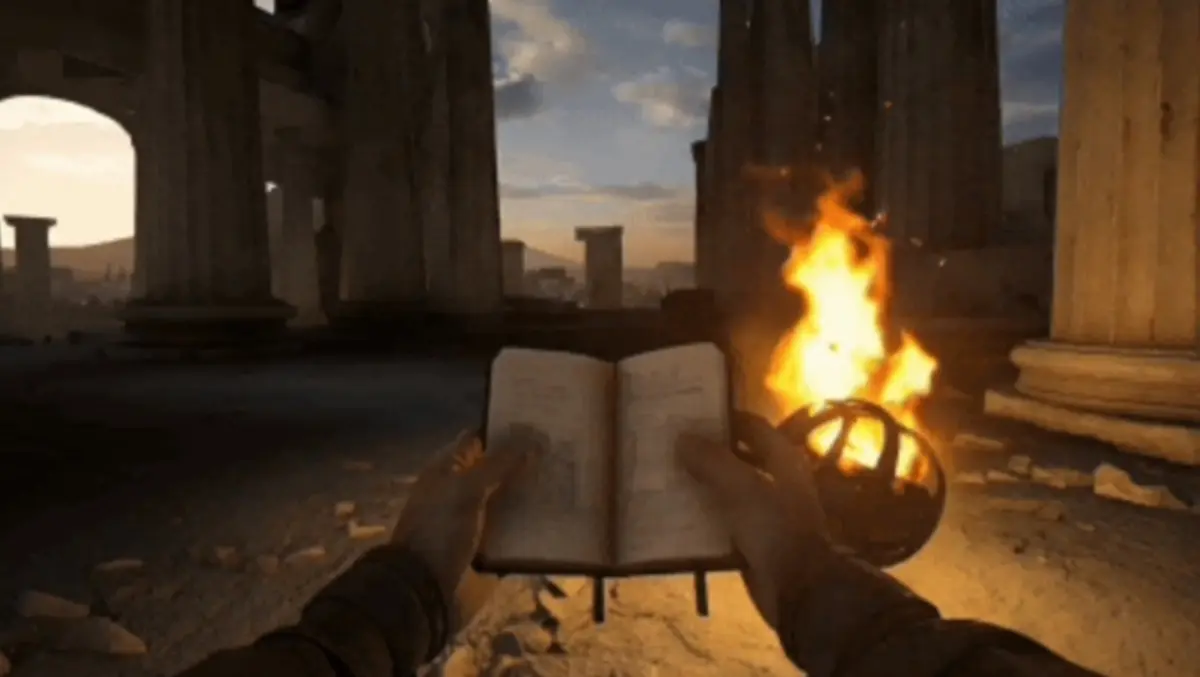
Table of Contents
Robbyant Open-Sources LingBot-World 2.0 for Real-Time AI Video
Robbyant, the embodied AI unit inside China’s Ant Group, open-sourced its LingBot-World 2.0 model on July 8. The system generates continuous, interactive video for up to an hour at 720p and 60 frames per second. That’s a sharp jump from LingBot-World 1.0, which topped out at minutes-level generation when it launched in January.
Developers can already pull the model from GitHub and Hugging Face, or test it live through Robbyant’s own Reactor platform. No waitlist, no gated access — just a download link and a fast-inference build meant to run in something close to real time.
What LingBot-World 2.0 Actually Does
Strip away the branding and this is a world model — software that generates a simulated environment frame by frame and lets a user move through it, rather than just watching a pre-rendered clip. Type a prompt, and the system builds a scene. Move a joystick or tap a key, and the scene responds, adjusting perspective and character position on the fly.
The headline feature is duration. Long-form video generation has a known failure mode: quality drifts. Textures blur, geometry warps, scenes lose coherence the longer they run. Robbyant says its causal pretraining approach, paired with a mechanism it calls Mask of Bidirectional Attention (MoBA), keeps that drift in check by having the model learn world evolution in strict chronological order. In hour-long stress tests, the company reported, visual output held steady.
Interactivity goes well past basic navigation. Users can trigger actions — attacking, archery, spellcasting, jumping, gliding — and call up environmental shifts like day-night cycles or sudden weather changes through text prompts alone. New entities can be dropped into a scene mid-session. And unlike the first version, LingBot-World 2.0 supports multiple users inside the same persistent world, opening the door to shared, AI-generated spaces rather than solo sandboxes.
| Spec | LingBot-World 1.0 | LingBot-World 2.0 |
|---|---|---|
| Generation length | Minutes-level | Up to one hour, continuous |
| Resolution / frame rate | Not optimized for real-time | 720p at 60fps |
| Interaction | Basic navigation | Actions, text-triggered events, multi-user |
| Agent structure | None | Pilot Agent + Director Agent |
An Agent Layer, Not Just a Renderer
Robbyant built a native agent mechanism into the release — something it’s calling a first for the world-model category. A Pilot Agent plans and executes character behavior inside the generated scene. A Director Agent introduces new events as the session develops, effectively scripting complications on the fly rather than leaving the environment static once it’s built. Robbyant describes the goal as environments that are “sustainably interactive and dynamically evolving,” a step past worlds you can merely look at and steer.
Latency was the other engineering problem. Generating a full video sequence and then playing it back doesn’t feel live. So Robbyant distilled a faster inference version of the model and reworked the generation pipeline so content gets created, sent, and displayed at the same time — closer to streaming than rendering. That’s the difference between a pre-baked demo reel and something that reacts while you’re still holding the controller.
Under the Hood: What’s Actually Different This Time
Most world models lean on bidirectional attention — the system scans both backward and forward across a sequence to smooth out inconsistencies. That works fine for a short clip. It falls apart over an hour. LingBot-World 2.0 flips the approach entirely. Its causal pretraining paradigm forces the model to learn strictly forward through time, frame by frame, in the same order the video actually plays — so errors never get the chance to compound backward through a sequence the model hasn’t finished generating yet.
That architectural choice pays off at inference time too. Instead of rendering a full hour of footage before showing any of it, the model processes video in chunks using key-value caching, weighing each new segment against a running memory of what came before rather than recalculating the entire scene from scratch. It’s the same trick that makes modern chat-based AI systems feel responsive instead of making users stare at a loading spinner — applied here to a moving, controllable world. Robbyant built the pipeline on top of the open Wan2.2 video generation codebase and gave it day-one support for SGLang, a serving framework designed for exactly this kind of low-latency, high-throughput inference.
The raw numbers make the leap concrete. LingBot-World 1.0 managed sub-second latency generating 16 frames per second — a solid first release, nothing more. Version 2.0 sustains 720p video at 60 frames per second across a full hour-long session. Nearly four times the frame rate, held vastly longer, without the blurring or geometry breakdown that usually shows up the moment a generative video model is pushed past a few minutes.
Tech Stack at a Glance
Four engineering decisions carry most of the weight in this release. Laid out in prose, they’re easy to skim past — so here’s the breakdown Alice Academy built to make the stack easier to scan at a glance.
What’s Powering the Hour-Long World
Learns world evolution strictly forward in time, frame by frame, so early errors can’t compound backward across an hour-long session.
A Pilot Agent handles character behavior in real time while a Director Agent scripts new events, keeping the world from going static.
Chunked generation with key-value caching on SGLang means frames get created, sent, and shown at once — not rendered, then played.
Multiple users can now share and interact within the same generated environment, a first for the LingBot-World line.
The pattern across all four is the same: nothing here is a single breakthrough so much as four separate fixes to the four ways long-form generated video usually breaks. Robbyant’s bet is that solving drift, staticness, latency, and isolation together is what actually makes a world model usable — not just watchable.
Part of a Busier Pattern
This didn’t land in isolation. Robbyant has been shipping open releases at an unusual clip this month — a multi-robot control model, the LingBot-VLA 2.0 “universal brain” for robotics, and spatial-perception models under the LingBot-Depth and LingBot-Vision names all landed within the same stretch of days. LingBot-World 2.0 arrived alongside a companion release, LingBot-Video, a Mixture-of-Experts video generation model built specifically for embodied AI and robotics work rather than general content creation.
That pairing matters more than it might look. Robbyant’s stated ambition is robotic companions and caregivers — systems aimed at elder care, medical assistance, household tasks. World models like this one give robotics teams a cheap, repeatable way to generate training and testing scenarios without needing a physical robot in a physical room every time. An hour of stable, controllable simulated environment is a meaningfully bigger sandbox than a few minutes.
The competitive backdrop is worth noting too. Developers across the AI sector have been racing to push generated video and simulated environments toward longer duration and tighter control — the kind of coherence that makes a world model useful for actual robotics research rather than just a novelty demo. Robbyant, backed by Ant Group’s resources, is betting that open-sourcing the tooling — rather than keeping it proprietary — builds the ecosystem faster than gatekeeping would.
Where to Try It
Robbyant has made three access routes available:
- Try Online (Reactor): reactor.inc/lingbot-world-v2
- GitHub: github.com/Robbyant/lingbot-world-v2
- Hugging Face: huggingface.co/collections/robbyant/lingbot-world-v2
The GitHub release notes that the model ships under a non-commercial share-alike license, so companies weighing a commercial build on top of it will want to read the license terms closely before shipping anything.
The Takeaway
Of LingBot-World 2.0
Open-sourcing a model this capable removes the biggest barrier to experimentation — cost — and hands it to anyone with a GPU and curiosity. Whether LingBot-World 2.0 becomes a serious robotics training tool or mostly ends up as a very good tech demo will depend on what independent developers actually build with it over the next few months, not on what Robbyant’s press release says it can do.
FAQs
It’s an open-source AI world model from Robbyant, Ant Group’s embodied AI unit, that generates continuous, interactive video environments users can navigate and change in real time.
The original version was limited to minutes-level generation. LingBot-World 2.0 extends that to roughly an hour of continuous output at 720p and 60fps, and adds an agent layer plus multi-user support.
The model is open-source and downloadable from GitHub and Hugging Face, and it’s also available to try through Robbyant’s Reactor platform. Commercial use is restricted under a non-commercial share-alike license, so businesses should check the license before deploying it commercially.
Sources Used
- IT Brief Asia — “Robbyant open-sources LingBot-World 2.0 for live video,” July 10, 2026
- Business Wire (via Morningstar) — “Robbyant Unveils LingBot-World 2.0: Pioneering Hour-Long Real-Time Generation in World Models,” July 8, 2026
- Robbyant/lingbot-world-v2 GitHub repository — official technical release notes and licensing terms
| For More Updates Like That; Visit Alice Academy