

Reserve your WhatsApp Username now in July 2026. Learn how early username reservations work, who is eligible, the rules for choosing one, and how to claim yours before the wider rollout.
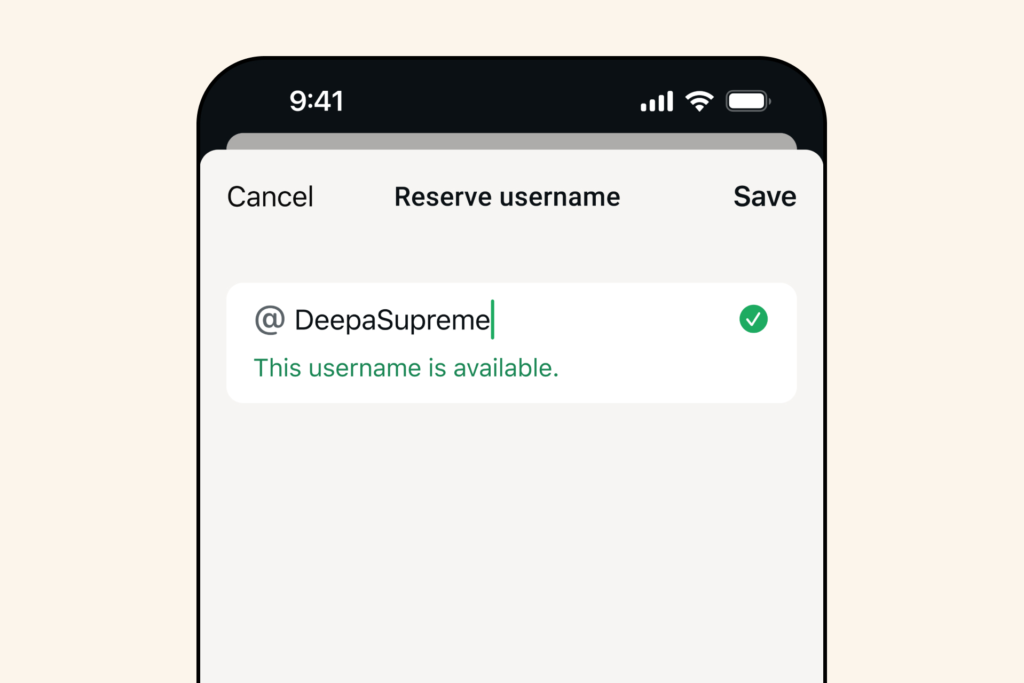
Usernames Are Coming to WhatsApp.
Here’s How to Reserve Yours Before Someone Else Does
WhatsApp opened username reservations this week, letting people on Android and iOS claim a personal handle months before the feature actually goes live. The change lets users message each other without ever exchanging phone numbers. Meta says the full rollout will happen gradually, country by country, over the coming months.
The Reservation Window Just Opened
For over a decade, a WhatsApp account has meant one thing: your phone number, visible to anyone you message. That’s changing. With more than three billion people on the platform, WhatsApp says overlapping names made an early reservation period necessary — otherwise the desirable handles would vanish within hours of launch. Right now, reserving a username doesn’t activate it. It just holds your spot until the feature switches on for your country.
Usernames will appear with an @ symbol, similar to Instagram or X, sitting alongside — not replacing — your existing display name. Once the feature is live for your account, people who message you for the first time using your username won’t see your number at all.
How to Claim Yours in Under a Minute
The process is short. Update WhatsApp to the latest version, then:
- Open Settings
- Tap Account
- Select Username
- Enter your preferred handle, or use WhatsApp’s built-in generator if it’s already taken
Businesses and creators get an extra option. If you already have a matching handle on Instagram or Facebook, you can claim the same one on WhatsApp by linking accounts through Meta’s Accounts Center — no need to fight over spelling variations across platforms.
The Rules Are Narrower Than They Look
WhatsApp isn’t leaving username formatting to chance. A few restrictions apply:
| Rule | Detail |
|---|---|
| Length | 3 to 35 characters |
| Allowed characters | Lowercase letters, numbers, periods, underscores |
| Not allowed | All-numeric usernames, restricted words/phrases |
| Formatting | Can’t start with “www.” or end in domains like “.com” or “.net” |
| Reserved names | Top celebrities, verified accounts, government and public-figure names are held back automatically |
Delete a username and WhatsApp holds it for 14 days before releasing it — enough time to change your mind. Switch phones and it follows you; switch to a different device entirely, though, and it currently doesn’t transfer.
Why Meta Is Doing This Now
WhatsApp’s head of product, Alice Newton-Rex, framed the change as overdue. Sharing a phone number with someone new — a classmate, a neighbor, someone met at an event — has always felt like handing over more than intended, she told reporters briefed on the launch. Usernames, in her telling, hand that control back to the user.
There’s no searchable directory attached to any of this. Type a partial name and nothing comes up — you need the exact username, the way phone numbers work today. WhatsApp is also rolling out an optional “username key,” a code that has to be shared before a stranger can message you for the first time at all.
Not Everyone Is Cheering
India’s IT ministry sent WhatsApp a formal notice days after reservations opened, asking the company to pause the rollout pending consultation. The concern: usernames could make phishing, impersonation, and so-called “digital arrest” scams easier to pull off, since a message no longer arrives with a traceable number attached. India is WhatsApp’s largest market by user count, and the ministry gave the company a short window to respond.
Security researcher Rachel Tobac, who runs SocialProof Security, sees it both ways. Usernames genuinely reduce how often people have to hand a stranger their number — that part’s a real privacy win. But she’s also flagged that near-identical usernames could still be used to impersonate real people or institutions, and her advice is blunt: pick something that’s hard to guess, not something built off your real name.
Meta’s response has been that it pre-reserves names tied to public figures and organizations specifically to head off impersonation. It hasn’t detailed exactly how that list is built, or how it plans to handle usernames that are close-but-not-exact matches to a real person’s handle — the kind of near-miss that got Binance founder Changpeng Zhao locked out of a username he uses everywhere else, by his own account.
WhatsApp Isn’t First to This Party
Telegram, Signal, and Wire have all run on usernames for years, without the phone-number requirement WhatsApp still enforces at signup. What’s different here is scale — three billion accounts is a different problem than a few hundred million, and it’s part of why WhatsApp is staggering the launch instead of flipping a single global switch.
What It Means for Users in Pakistan
Pakistan hasn’t had a confirmed rollout date set publicly, and reservations here are opening in step with the same phased schedule everyone else is seeing. That’s worth sitting with for a moment — the reservation window rewards early movers regardless of when the feature itself goes live locally, so claiming a handle now still locks it in. For a market where WhatsApp doubles as a primary channel for everything from family group chats to small business orders, the eventual shift away from phone-number-first contact is a meaningful one, even if it lands a few months behind the countries getting it first.
The India pushback is also relevant closer to home. Regulators there are testing whether privacy features and fraud prevention can coexist at WhatsApp’s scale, and however that plays out will likely shape how the feature looks by the time it reaches Pakistani accounts.
The Bigger Shift Here
For WhatsApp Username
Phone numbers built WhatsApp’s entire trust model — you knew who you were talking to because the number gave it away. WhatsApp Usernames break that link on purpose. Whether that trade works out depends less on the feature itself and more on how well Meta polices the gap between a real account and a convincing fake one.
FAQs
Reservations are open now, but the feature itself — actually using a username to message and be found — is rolling out gradually by country over the coming months.
Yes. A phone number is still required to create and verify an account. Usernames only change what other people see when you message them.
Yes, if you own that handle on Instagram or Facebook, you can link it through Meta’s Accounts Center and claim it on WhatsApp — provided no one else has already taken it there.
Nothing changes. WhatsApp says usernames are entirely optional, and the app works exactly as before if you skip it.
No. There’s no public directory or autocomplete. Someone needs your exact username to contact you for the first time.
WhatsApp holds it for 14 days before releasing it to anyone else, giving you a window to reclaim it if you change your mind.
Meta says it pre-reserves names linked to public figures and organizations, but security researchers note that similar-looking usernames could still be used to impersonate people or institutions. Choosing a username that isn’t easily guessable is the main protection available right now.
| For More Updates Like That; Visit Alice Academy