
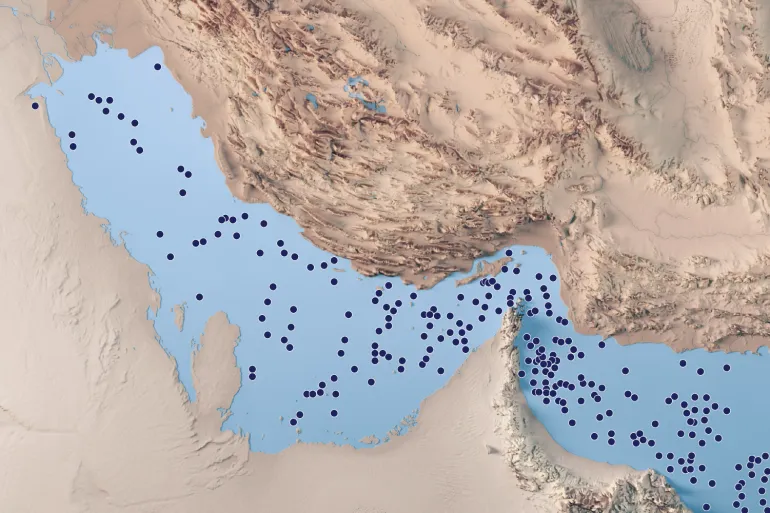

Strait of Hormuz news: the US-Iran ceasefire crumbles as strikes resume, shipping plunges and oil markets brace for more volatility.
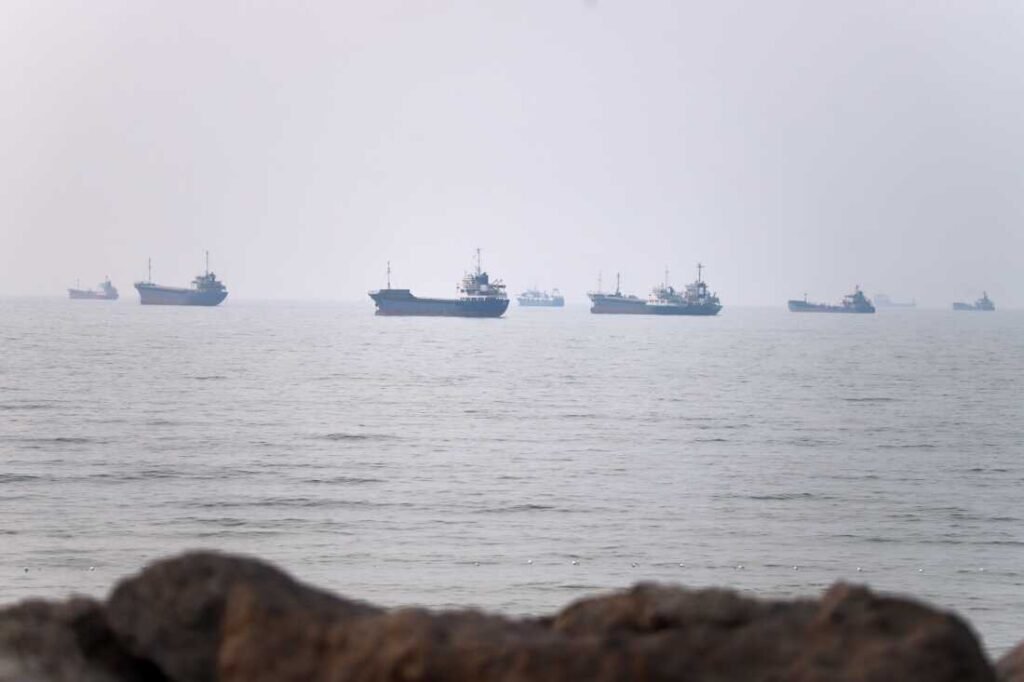
Strait of Hormuz News (10 July 2026)
Table of Contents
Fresh Attacks After Ceasefire Raise Fears of Renewed US-Iran Conflict
The ceasefire between the United States and Iran is, in every practical sense, dead. Two nights of the heaviest US strikes on Iranian territory since April gave way Friday to an uneasy silence, but the Strait of Hormuz — the chokepoint that carries roughly a fifth of the world’s oil and gas — remains close to a standstill, and nobody on either side is calling this over.
What Happened This Week
It started, again, with tankers. Iran’s Islamic Revolutionary Guard Corps struck commercial vessels transiting near Hormuz early this week, including a Qatari-flagged LNG carrier that caught fire and a Saudi-flagged crude tanker damaged in the same stretch of water. Washington called it a ceasefire violation. President Trump, speaking from the NATO summit in Ankara, didn’t hold back — he told reporters the truce with Tehran was over and called Iranian leaders “sick” and “scum.”
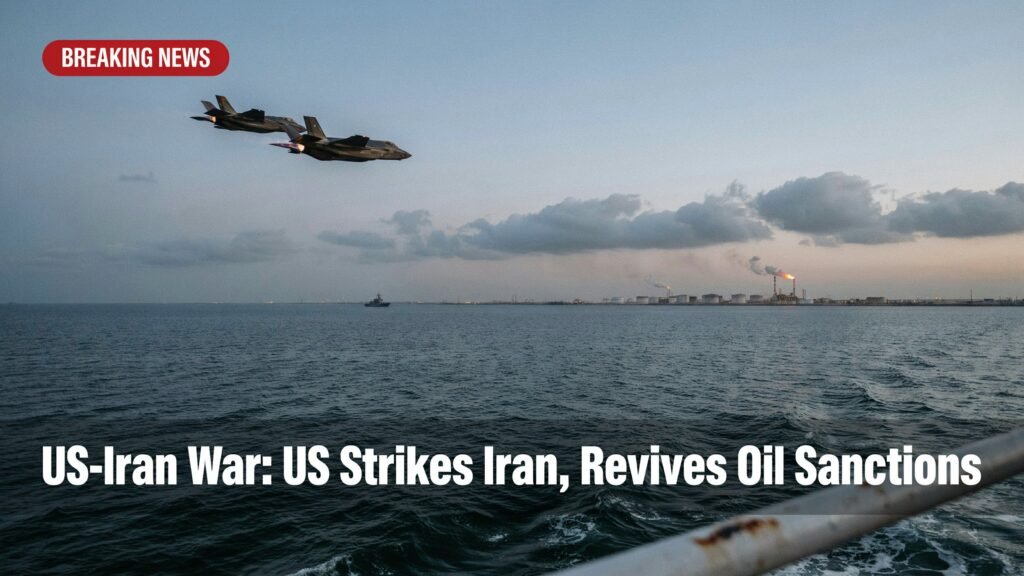
The military response followed within hours. US Central Command hit roughly 80 Iranian targets overnight Tuesday into Wednesday — air defenses, coastal radar, missile storage sites. Thursday brought a second wave, larger this time, with CENTCOM reporting around 90 targets struck to further degrade Iran’s ability to threaten shipping. Iran didn’t sit still either. The IRGC and Iranian army fired projectiles at US bases in Bahrain and Kuwait, and Iranian forces shot down a US drone. Regional officials quoted by state media said strikes also hit near the perimeter of the Bushehr nuclear plant and a fishing pier in the nearby town of Banood, though Washington has not confirmed hitting nuclear-adjacent infrastructure specifically.
Casualties remain hard to pin down precisely — the full toll is still being tallied on the Iranian side. Iranian health authorities told the United Nations that 14 people were killed and dozens more wounded across five provinces over the two days of exchanges. No American or allied casualties have been reported; US officials say strikes on Bahrain and Kuwait caused no significant damage.
By Friday, both militaries had gone quiet. CENTCOM says no new US strikes occurred on 10 July, and there’s no confirmed Iranian attack either. That doesn’t mean the danger has passed. It means both sides are, for the moment, watching each other.
[ PROMINENT WIDGET: “By the Numbers” stat callout — see accompanying HTML file ]
Oil Markets and the Data Behind the Panic
Traders are watching Hormuz shipping data the way meteorologists watch a storm track. Brent crude sat at $75.92 a barrel Friday morning, actually down slightly on hopes that shipping would eventually resume — but still roughly 6% higher for the week. West Texas Intermediate traded near $71.39. Both benchmarks remain far below the wartime peak of over $180 a barrel hit back in April, when the strait was fully blockaded.
TD Securities strategist Bart Melek expects the pressure to build regardless: he projects Brent moving $10 to $15 higher this summer as global oil inventories keep shrinking. And market confidence right now rests on something narrower than a lasting peace — traders are largely relieved the US avoided hitting Iranian energy infrastructure directly, according to ANZ commodity strategist Daniel Hynes. Trump, for his part, said this week he doesn’t expect the war to restart in earnest and that “anything that happens is going to be over very quickly.”
How a June Ceasefire Fell Apart Over One Sentence
To understand Friday’s tension, rewind to 28 February 2026. That’s when Israeli and US airstrikes killed Iran’s Supreme Leader, Ayatollah Ali Khamenei, along with other senior officials — the opening blow of a war that shut the strait entirely for months. A shaky two-week ceasefire, brokered by Pakistan, took hold in April and was later extended indefinitely. On 17 June, Trump and Iranian President Masoud Pezeshkian signed the Islamabad Memorandum, a 14-point understanding meant to end the war for good. It reopened Hormuz, lifted the US naval blockade, and opened a 60-day window for a permanent deal.
The whole arrangement has since come apart over a single clause. Article 5 of the memorandum says Iran will use its “best efforts” for safe passage of commercial vessels at no charge — language Tehran reads as granting it authority to manage which ships cross and by what route. Washington insists it means nothing of the sort. Iran acted on its interpretation anyway, standing up a body it calls the Persian Gulf Strait Authority and warning vessels that bypass its approved lanes travel at their own risk. That dispute, more than anything else, is what’s driving the current fighting.
Khamenei’s funeral proceedings, only just concluding this week, added another layer of instability. His son and successor, Mojtaba Khamenei, reportedly stayed away from public burial ceremonies, and regime supporters opposed to any deal with Washington were said to have confronted Foreign Minister Abbas Araghchi and President Pezeshkian during the mourning period — a sign that Tehran’s own government may not fully control the IRGC forces actually doing the fighting.
| Date | Event |
|---|---|
| 28 Feb 2026 | Israeli-US strikes kill Khamenei; full-scale war and Hormuz blockade begin. |
| 8 Apr 2026 | Pakistan-brokered two-week ceasefire takes effect; later extended indefinitely. |
| 17 Jun 2026 | Trump and Pezeshkian sign the Islamabad Memorandum, reopening the strait. |
| 6–7 Jul 2026 | IRGC strikes commercial tankers near Hormuz; Trump declares ceasefire “over.” |
| 7–8 Jul 2026 | US strikes roughly 80, then 90, Iranian targets over two nights. |
| 8–9 Jul 2026 | Iran fires on US bases in Bahrain and Kuwait; downs a US drone. |
| 10 Jul 2026 | No new strikes reported; IMO Council rejects Iran’s Hormuz authority claim; shipping near standstill. |
Who Feels This — From Global Shipping to Household Budgets in Pakistan
Almost no large tanker is moving right now without turning its transponder off. Lloyd’s List Intelligence says no vessel above 10,000 deadweight tonnes has crossed the Oman-hugging “southern” route with its AIS switched on since 7 July, though at least two are believed to have crossed dark. Insurers have pushed war-risk premiums sharply higher, and container lines including Maersk have continued diverting some traffic around the Cape of Good Hope rather than risk the Gulf.
For Pakistan, this isn’t an abstract headline from somewhere else. Islamabad imports the bulk of its crude and LNG through Gulf routes exposed to exactly this kind of disruption, and a sustained spike in Brent adds direct pressure to the import bill and, by extension, the rupee. Add in the hundreds of thousands of Pakistani workers living near the very bases in Bahrain and Kuwait that came under Iranian fire this week, and the stakes stop being theoretical for a lot of readers. A prolonged closure would ripple into fuel prices, freight costs and remittance flows all at once.
Guidance for Shippers, Insurers and Travelers
- UKMTO and the Joint Maritime Information Center currently rate the strait’s threat level as severe and recommend the longer Oman-side route with continuous VHF contact.
- The IMO’s seafarer evacuation framework, paused after recent strikes, has moved roughly 136 ships and 2,900 seafarers out of the Gulf to date and is expected to resume once safety guarantees are reconfirmed.
- Vessel operators should expect elevated war-risk insurance premiums to persist regardless of whether a new truce is reached this month.
Tracking the Situation
- IMO Strait of Hormuz updates — imo.org, official Secretary-General statements and evacuation-plan status
- UKMTO advisories — issued jointly with the Joint Maritime Information Center for threat-level changes
- Kpler / MarineTraffic / Lloyd’s List — live AIS vessel-tracking data used to measure daily Hormuz transits
| Issue | US / Allied Position | Iranian Position |
|---|---|---|
| Control of Hormuz | Article 5 gives Iran a duty not to obstruct passage, not a veto over it. | The clause grants Tehran authority to manage routing and approve vessels. |
| Ceasefire status | Trump says the memorandum is “over,” though talks aren’t fully closed. | Iran says it remains committed to the deal but will respond to violations. |
| 7–8 July strikes | Targets were military — air defenses, radar, missile sites, naval craft. | State media alleges strikes reached near the Bushehr nuclear plant perimeter. |
Ceasefires built on one disputed sentence rarely survive contact with a chokepoint both sides think they can leverage. That’s what’s happening in Hormuz again this week, one tanker with its transponder switched off at a time — and until Washington and Tehran agree on what “safe passage” actually means, every lull is just the space between the next two strikes.
Conclusion
Till Yet For Strait of Hormuz News
The Strait of Hormuz remains the fault line in a war that never quite ended. Friday’s calm holds only because both militaries chose to hold their fire, not because Washington and Tehran resolved what “safe passage” actually means. Until that single disputed clause gets settled — at the negotiating table rather than through tankers going dark and airstrikes counted in the dozens — the region should brace for this cycle to repeat. For Pakistan and the wider region, that means watching oil prices and shipping data as closely as any diplomatic statement, because right now, they’re telling the truer story.
FAQs
President Trump has said he considers it over, but negotiations haven’t formally ended. Iran maintains it’s still committed to the June memorandum while accusing Washington of violations.
Iranian forces struck commercial tankers near Hormuz in early July, which the US treated as a ceasefire breach and answered with two nights of airstrikes on Iranian military sites.
Not formally closed, but effectively near-empty. Tracking firms report almost no large tankers transiting with their location transponders on since 7 July.
Brent crude is trading around $76 a barrel, up about 6% for the week but still far below April’s wartime peak above $180.
Sources Used
- U.S. Central Command (CENTCOM) public strike statements, 7–8 July 2026
- Reuters — “Countries must reject Iran efforts to control Hormuz,” 10 July 2026
- CNN — live coverage, “US-Iran ceasefire crumbles as fresh strikes rock Middle East,” 9 July 2026
- Al Jazeera — “Strait of Hormuz traffic plunges as US, Iran resume fighting,” 10 July 2026
- ABC News — “How the US-Iran ceasefire and MOU broke down: a timeline,” 9 July 2026
- The Washington Post — “US, Iran trade dozens more strikes for a second straight day,” 8–9 July 2026
- UN News — “US-Iran war leaves shipping at near-standstill in Hormuz again,” 9–10 July 2026
- Council on Foreign Relations — analysis on Strait of Hormuz recovery obstacles, 8 July 2026
| For More Updates Like That; Visit Alice Academy