
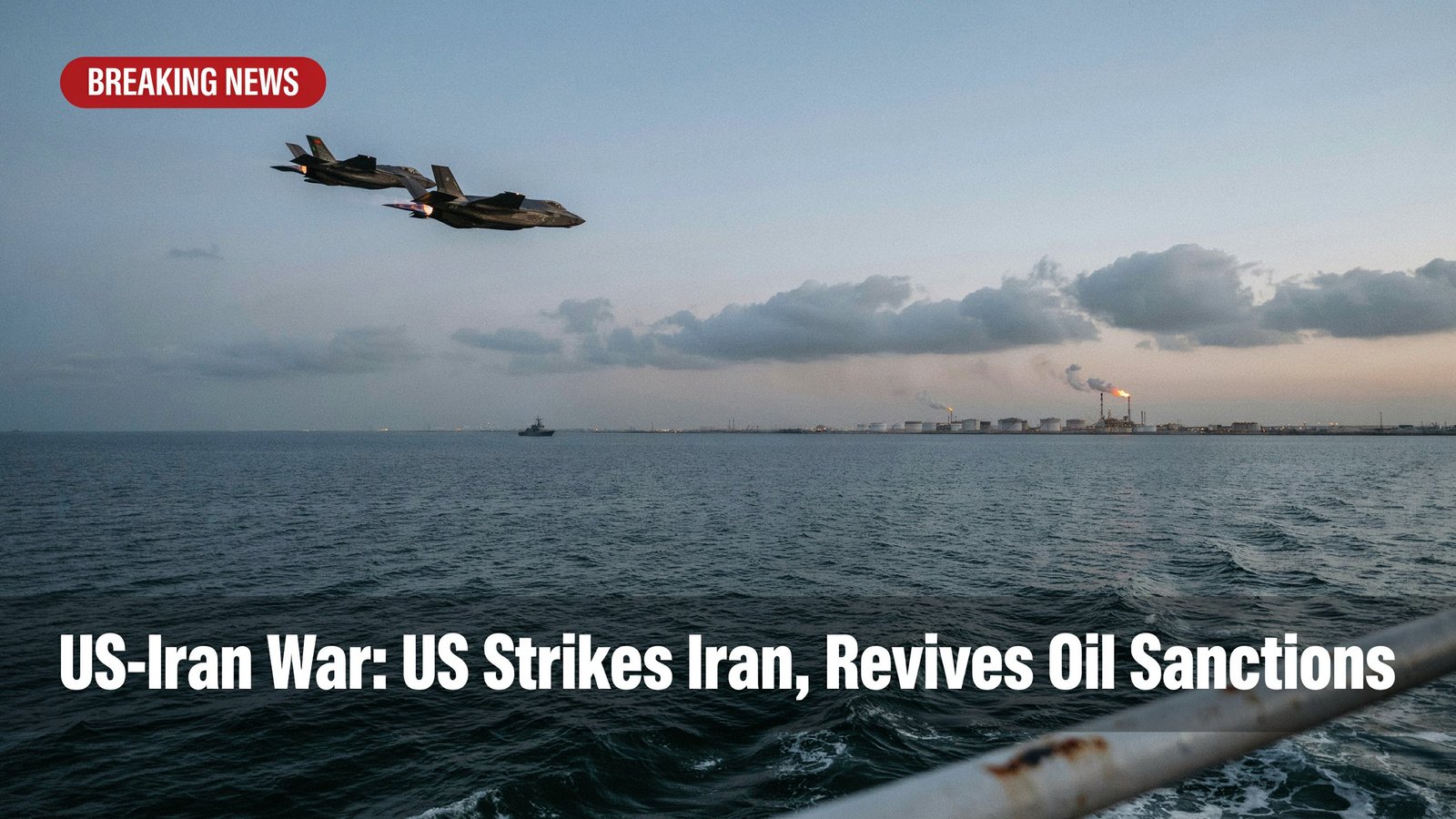

The US-Iran war escalates as CENTCOM hits 80+ Iranian targets and Washington reimposes oil sanctions after tanker attacks near Hormuz.
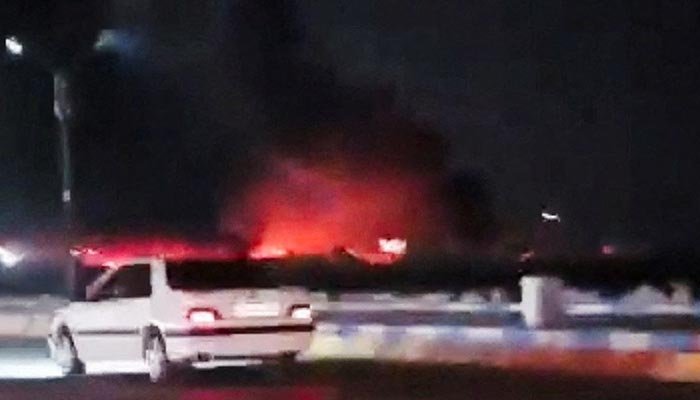
Table of Contents
US Launches New Strikes on Iran After Reinstating Oil Sanctions Over Shipping Attacks
The US-Iran war took a sharp turn Tuesday, July 7, when US Central Command struck more than 80 targets across Iran and the Treasury Department tore up the license that had let Tehran sell oil abroad. Both moves came within hours of each other. Both were framed by Washington as punishment for attacks on three commercial ships in the Strait of Hormuz.
It’s the most serious test yet of a ceasefire that’s barely five weeks old.
What Happened Overnight
CENTCOM said its forces had begun a new wave of strikes intended, in the military’s own words, to impose “heavy costs” on Iran for hitting commercial vessels in an international waterway. The targets read like a list built to blind and disarm: air defense systems, coastal radar and surveillance sites, command-and-control networks, surface-to-air and anti-ship missile batteries, drone launch sites, and more than 60 small boats belonging to the Islamic Revolutionary Guard Corps, according to Bloomberg.
Iranian state media reported explosions before dawn Wednesday in three places — the southern port city of Sirik, Qeshm Island, and Bandar Abbas. Video grabs distributed by Reuters showed smoke rising over Bandar Abbas in Hormozgan province in the aftermath.
“This is punishment,” a US official told CNN. “It won’t be over for a bit.”
US Launches New Strikes on Iran After Reinstating Oil Sanctions
Why Now
The trigger was Monday’s attacks on shipping in the strait. A Qatari LNG tanker, the Al Rekayyat, was hit by a drone that started a fire in its engine room; the crew got off safely. A Saudi-flagged supertanker believed to be the Wedyan was also damaged off Oman. A second US official said early indications pointed to Iran having fired on all three vessels.
Iran’s foreign ministry pushed back hard, calling Qatar’s accusations perplexing and insisting Tehran was meeting its obligations under the ceasefire — while also warning that commercial vessels using routes not coordinated with Iran faced risk. Iran’s top negotiator, Mohammad Bagher Ghalibaf, accused Washington of violating the two countries’ memorandum of understanding, posting on X that “the era of bullying and extortion is over.”
Alongside the military response, the US Treasury revoked a general license issued June 22 that had allowed Iran to sell crude oil and petroleum products through August 21. Buyers now have until July 17 to wind down any deals already in motion. Oil prices jumped more than 3% within hours of the announcement.
The War This Ceasefire Was Supposed to End
Context matters here, and it’s grim. The war itself started in February, when US and Israeli strikes swept across Iran and killed Supreme Leader Ayatollah Ali Khamenei along with his daughter, granddaughter, son-in-law, and daughter-in-law on day one. A ceasefire reached last month opened a 60-day window for negotiating something permanent. Indirect talks in Qatar wrapped up last week without progress.
Even the timing of Tuesday’s strikes collided with mourning. Hundreds of thousands of people had just filled the streets of Qom to accompany Khamenei’s casket, comparing him to revered Shi’ite martyrs. Iran’s President Masoud Pezeshkian was attending related funeral ceremonies in Iraq when the strikes hit and cut his trip short to fly home.
President Trump had been signaling this was coming. In the Oval Office Monday, he told reporters Washington was ready to either finalize a deal or, as he put it, “finish the job,” adding that US forces could knock out Iran’s bridges in an hour and its energy supply along with them. Iran’s foreign minister, Abbas Araqchi, said talks on a final agreement would “not commence if threats continue.”
The Region Is Feeling It Too
The fallout isn’t staying inside Iran’s borders. Kuwait’s air defenses were reported responding to hostile missile and drone threats Tuesday, with the military urging the public to follow safety instructions and warning that explosions might be heard as interceptors worked. Iran has targeted US sites in Kuwait before, including Ali Al Salem air base, Camp Arifjan, and Camp Buehring — so the nerves there aren’t new, even if the specific threat is.
For shippers, the calculus just got harder again. The whole point of the June ceasefire was to reopen the strait and bring oil prices down; that’s exactly what had been happening until Iran started firing on vessels it says didn’t coordinate their routes with Tehran.
What Happens Next
The July 17 deadline for winding down Iranian oil transactions is the next hard date on the calendar, and it’s a short runway. Whether Tehran responds with further strikes on shipping, holds fire to protect the negotiating track, or does both at once is, at this point, genuinely unclear — even to officials close to the talks.
Four months after a war many assumed would end fast, this ceasefire keeps proving easier to break than to rebuild. The next ten days will say a lot about which way it’s headed.
Conclusion
For US-Iran War
Four months after a war many assumed would end quickly, the pattern is becoming familiar: strikes, a pause, a violation, then strikes again. What’s different this time is the sanctions reversal — Washington hasn’t just responded militarily, it’s pulled back an economic concession it had already given, which raises the cost of walking this back for both sides. Iran gets until July 17 to wind down its oil sales, and that date now sits alongside the ceasefire’s own expiration as the next real test of whether this stays a fragile truce or slides back into open war. Neither side has said the talks are dead. But neither has given the other much reason yet to believe they’re close to alive.
FAQs
Attacks on three commercial vessels in the Strait of Hormuz on Monday, including a Qatari LNG tanker and a Saudi-flagged supertanker.
CENTCOM and US officials cited by Bloomberg and CNN say the strikes hit more than 80 sites, including air defenses, radar, missile systems, and IRGC boats.
The Treasury Department revoked a June 22 license that had allowed Iran to sell crude oil, citing the tanker attacks as a ceasefire violation. Buyers have until July 17 to unwind existing deals.
Officially, yes, but both the strikes and the sanctions reversal are described by analysts as among the most serious tests it has faced since June.
The Qatari tanker Al Rekayyat suffered an engine-room fire from a drone strike; its crew was evacuated safely. A Saudi-flagged supertanker was damaged off Oman.
Yes. Oil prices rose more than 3% after the strikes and sanctions news broke.
Kuwait reported its air defenses responding to missile and drone threats the same day, though officials haven’t tied that directly to the Iran strikes.
Sources Used:
- CNN, “US strikes Iran and reimposes oil sanctions as ceasefire faces one of its most significant tests,” July 7, 2026
- CNN, “US hits more than 80 Iran targets, reimposes oil sanctions,” July 7, 2026
- Bloomberg, “US Strikes Iran and Blocks Oil Sales, in New Test of Truce,” July 8, 2026
- Associated Press (via ABC News/Navy Times), “US launches new strikes on Iran after reinstating oil sanctions over shipping attacks,” July 7, 2026
- Reuters (image credit, Bandar Abbas footage), July 8, 2026
➛ For More Updates Visit Alice Academy